

Maintenance work often continues across multiple shifts. Learn how to transfer lockout/tagout responsibility between outgoing and incoming employees without interrupting hazardous-energy protection.
Maintenance and repair work often continues beyond the end of a single shift. Equipment rebuilds, production-line modifications, electrical repairs, and unplanned breakdowns may involve several crews working over many hours or days. Every lockout tagout shift change must preserve employee protection while responsibility passes from outgoing workers to incoming workers.
A poorly managed transfer can leave an incoming employee without personal protection, create confusion about stored energy, or allow equipment to be restarted while work remains underway. OSHA requires employers to use specific procedures during shift or personnel changes so lockout or tagout protection remains continuous.
A compliant lockout tagout shift change is more than a verbal maintenance update. Incoming personnel must understand the equipment’s condition, review the active energy controls, apply the required personal device, and formally accept responsibility before beginning work.
A documented lockout tagout shift change also gives supervisors a consistent standard for evaluating each handoff.
Why Shift Changes Create Additional Risk
During a normal lockout/tagout operation, an authorized employee identifies hazardous-energy sources, shuts down the machine, isolates the energy, applies locks or tags, controls stored energy, and verifies isolation.
A lockout tagout shift change introduces employees who may not have personally completed those steps. The incoming worker may not know whether every disconnect was opened, whether hydraulic pressure was released, whether an elevated component was blocked, or whether equipment conditions changed during the previous shift.
Without a structured handoff, incoming personnel may rely on incomplete verbal information. Fatigue, production pressure, overlapping contractors, and multiple maintenance departments can further increase the risk of a missed isolation point or an incorrect assumption.
The employer’s procedure should create an overlap in protection. The outgoing employee’s device should remain in place until the incoming employee has reviewed the work, verified the energy-control condition, and applied the required personal lock or tag.
What OSHA Requires During Personnel Changes
Under 29 CFR 1910.147(f)(4), employers must use specific procedures during shift or personnel changes to ensure continuity of lockout or tagout protection. OSHA requires an orderly transfer of device protection between off-going and oncoming employees to minimize exposure to unexpected energization, startup, or the release of stored energy.
OSHA does not require every facility to use one identical transfer method. The employer may design a process appropriate for its machinery, staffing structure, group-lockout system, and energy-control program. However, each lockout tagout shift change must prevent a gap in protection.
The written procedure should explain:
- Who coordinates the transfer
- When incoming employees apply their devices
- When outgoing employees remove their devices
- How energy isolation is verified
- How group-lockout responsibility changes
- How contractors are included
- What documentation must be completed
- What happens when shifts do not overlap
The same lockout tagout shift change requirements should apply consistently across departments.
Who Participates in the Transfer?
An authorized employee is a worker who locks or tags out equipment to perform servicing or maintenance. An affected employee generally operates the equipment or works in the area where servicing occurs.
Only trained authorized employees should assume responsibility for implementing the energy-control procedure. During a lockout tagout shift change, the incoming authorized employee must understand the type and magnitude of the hazardous energy and know the methods used to isolate and control it.
A supervisor may coordinate the transfer, but a supervisor’s lock should not replace the personal protection required for each exposed authorized employee.
Group Lockout During Shift Changes
Group lockout requires additional coordination because several employees may be exposed to the same hazardous energy.
OSHA requires primary responsibility for a group lockout operation to be assigned to an authorized employee. When multiple crews, crafts, or departments are involved, an authorized employee must coordinate the work and maintain continuity of protection.
A group lockout tagout shift change must account for employees who remain on the project, leave early, join late, or transfer between crews.
When group servicing extends into another shift, OSHA’s group-lockout and shift-change provisions both apply.
The leadership change must not reduce any employee’s personal control over their protection.
What If the Shifts Do Not Overlap?
The safest transfer occurs when outgoing and incoming employees are both present, but schedules do not always overlap.
Employers should create a written process for:
- Delayed employee arrivals
- Unexpected absences
- Non-overlapping crews
- Emergency maintenance
- Contractor staffing changes
- Projects that remain inactive between shifts
Possible methods may include requiring a designated authorized employee to remain, maintaining an operations or continuity lock, prohibiting additional work until verification is complete, or using a controlled group lockbox.
OSHA enforcement guidance recognizes properly administered master-tag or work-permit systems combined with employee accountability, verification, and a walk-through as one potential method of satisfying group-lockout and shift-transfer provisions.
The equipment should remain secured until incoming personnel complete the required review, verification, and application of personal protection.
A written note, text message, or electronic status update does not replace physical energy-control measures.
What If an Employee Leaves a Lock Behind?
An employee should normally remove their own personal lock.
When someone leaves unexpectedly and a device remains attached, the employer must follow its documented absent-employee removal procedure.
The employer should:
- Verify that the employee is not at the facility
- Make reasonable efforts to contact the employee
- Confirm that the employee is not exposed
- Inspect the machine and work area
- Obtain designated management authorization
- Document the reason for removal
- Inform the employee before they resume work
A forgotten lock should not be cut off merely to complete a lockout tagout shift change or restart production.
Contractors and Multi-Employer Worksites
Contractors frequently participate in shutdowns, installations, and repairs that span multiple shifts.
The host employer and outside employer must inform each other of their respective energy-control procedures. The host employer must also ensure its employees understand and comply with the restrictions and prohibitions associated with the outside employer’s procedure.
Before work begins, the parties should establish:
- Which employer controls the overall lockout
- Who serves as the primary authorized employee
- How contractor personnel apply personal locks
- How shift rosters are maintained
- How incoming contractor employees verify isolation
- How work status is communicated
- How contractor devices are handled if a worker leaves
- Who authorizes release of the equipment
Contractor employees must be included in the accountability process whenever they are exposed to hazardous energy.
Common Shift-Change Mistakes
Training Employees on the Procedure
Authorized employees should be trained on:
- The facility’s transfer sequence
- Employee roles and responsibilities
- Energy-isolation verification
- Group-lockbox procedures
- Required documentation
- Contractor coordination
- Non-overlapping shifts
- Absent-employee lock removal
- Prohibited shortcuts
Training should include practical exercises. Employees should demonstrate that they can complete a lockout tagout shift change without creating a gap in protection.
OSHA requires retraining when job assignments, equipment, processes, hazards, or energy-control procedures change and when inspections reveal deviations or inadequate employee knowledge.
Periodic Inspection of Shift-Change Practices
OSHA requires each energy-control procedure to be inspected at least annually. The inspection must be performed by an authorized employee other than the employees using the procedure being inspected, and observed deficiencies must be corrected.
For procedures involving personnel transfers, the inspector should evaluate whether employees:
- Review the status of the work
- Verify energy isolation
- Apply incoming devices before outgoing devices are removed
- Account for every authorized employee
- Follow group-lockout requirements
- Transfer coordination responsibility
- Include contractor personnel
- Complete required documentation
Observing an actual lockout tagout shift change during the annual inspection can reveal weaknesses that are not visible in written procedures.
A procedure that appears adequate on paper may not address delayed arrivals, contractor changes, missing records, communication failures, or actual equipment conditions.
Managing Shift Transfers Digitally
Paper sign-in sheets and handwritten maintenance logs can make it difficult to determine who is protected by a lockout, when responsibility changed, or whether verification was completed.
A digital LOTO-management system can help facilities:
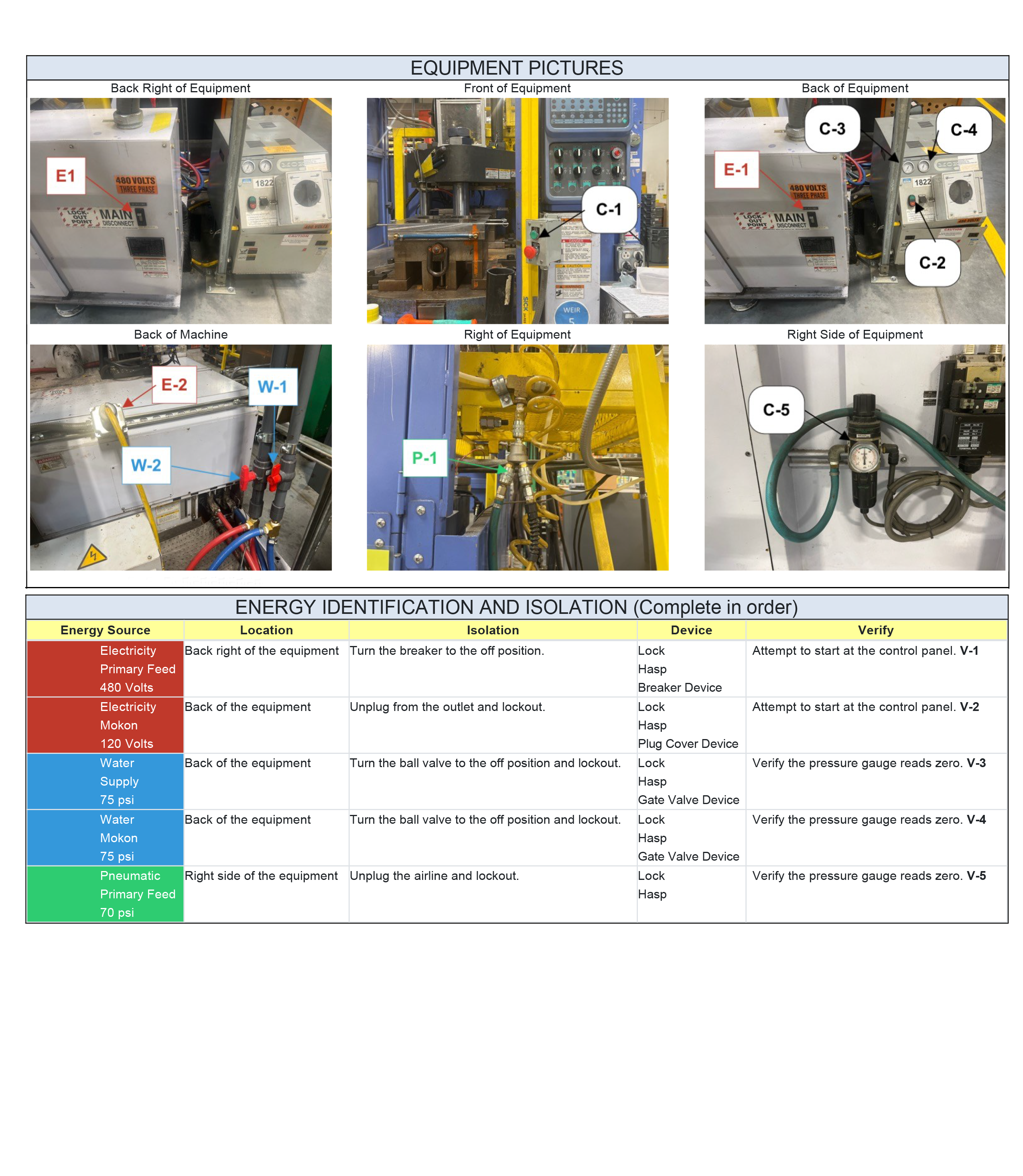
- Maintain machine-specific procedures
- Display energy-isolation photographs
- Identify hazardous-energy sources
- Record incoming and outgoing personnel
- Document transfer times
- Capture employee acknowledgments
- Track group-lockbox participation
- Record verification steps
- Attach notes and photographs
- Manage contractor involvement
- Maintain procedure revision history
- Produce centralized compliance records
Smart Safety Pro helps industrial facilities and safety consultants create, access, validate, and inspect machine-specific lockout/tagout procedures.
Mobile records can improve consistency between crews and provide clearer documentation of employee accountability throughout long maintenance projects.
Final Takeaway
A lockout tagout shift change is a transfer of responsibility for controlling potentially deadly hazardous energy. It should never be treated as an informal maintenance update.
A compliant process maintains continuous protection, gives incoming personnel enough information to understand the work, permits verification of isolation, and ensures that personal devices are applied and removed in the proper sequence.
Employers should establish the process in writing, train authorized employees, include contractors and group-lockout participants, observe real transfers, and correct inconsistencies identified during periodic inspections.
Smart Safety Pro provides mobile tools for documenting hazardous-energy sources, displaying machine-specific isolation steps, capturing equipment photographs, performing periodic inspections, and maintaining centralized LOTO records.
Frequently Asked Questions
This article provides general information about OSHA lockout/tagout requirements and is not legal advice. Employers should evaluate each machine, task, energy source, and workplace condition individually and consult qualified safety or legal professionals when necessary.