

OSHA’s Hazard Communication Standard affects nearly every industrial workplace that uses hazardous chemicals. Yet outdated chemical inventories, missing secondary-container labels, inaccessible SDSs, and generic employee training continue to create compliance gaps. Here are the areas manufacturers should review.
Hazard Communication is one of OSHA’s most familiar workplace safety requirements, yet it remains one of the easiest programs for employers to let drift out of compliance. Most manufacturing facilities have safety data sheets. Most have labels on chemical containers. Most provide some form of employee chemical-safety training. The problem is that OSHA’s Hazard Communication Standard requires all of those elements to work together as a living program.
Under 29 CFR 1910.1200, employers with hazardous chemicals in the workplace generally must maintain a written program, keep an inventory of hazardous chemicals, ensure appropriate labeling, provide access to safety data sheets, and train affected employees. The purpose is straightforward: workers need to know what chemicals they may encounter, what hazards those chemicals present, and how to protect themselves.
The challenge is that a program can appear complete on paper while still having significant gaps in the field. A binder may exist in the safety office, but the chemical inventory may be outdated. Employees may have completed annual training, but they may not recognize a pictogram or know how to locate an SDS during an emergency. Secondary containers may be missing workplace labels. Contractors may bring chemicals onsite without the required information exchange.
For small and mid-sized manufacturers, these gaps can develop gradually as products, processes, suppliers, and personnel change.
What OSHA Requires
OSHA’s Hazard Communication Standard is built around a few core responsibilities. Chemical manufacturers and importers classify chemical hazards and provide labels and safety data sheets. Employers that use hazardous chemicals must then make that information available and understandable to employees.
For most industrial employers, a compliant program should address five connected elements:
- A written program describing how the facility complies with the standard.
- A current list or inventory of hazardous chemicals present in the workplace.
- Proper labels and other forms of warning.
- Accessible safety data sheets for hazardous chemicals.
- Employee information and training.
Each part supports the others. An accurate chemical inventory is of limited value if the corresponding SDS cannot be found. A compliant supplier label does little good if a worker pours the product into an unlabeled secondary container. Training loses its effectiveness if it does not reflect the chemicals and tasks employees actually encounter.
Mistake #1: Treating the Written Program as a One-Time Document
One of the most common Hazard Communication mistakes is creating a written program once and then leaving it unchanged for years.
A written program should explain how the facility manages labels, SDSs, employee information and training, hazardous chemical lists, non-routine tasks, and other applicable responsibilities. It should also reflect how the facility actually operates. OSHA requires employers to develop, implement, and maintain a written program at each workplace.
If the plant adds a new production line, changes cleaning chemicals, introduces a new coating process, moves SDS access to an electronic platform, or changes who is responsible for chemical approval, the written program may need to be reviewed.
The goal is not paperwork for its own sake. The written program should describe a functioning system that employees and supervisors can follow.
Mistake #2: Allowing the Chemical Inventory to Become Outdated
A strong Hazard Communication program starts with knowing which hazardous chemicals are actually present.
This sounds simple until a facility has maintenance shops, production areas, laboratories, janitorial closets, paint cabinets, compressed gases, lubricants, adhesives, welding products, treatment chemicals, and contractor-supplied materials spread across multiple departments.
Over time, products are replaced, discontinued, or purchased locally. An SDS library can grow while the chemical inventory becomes disconnected from what is physically onsite.
A practical chemical inventory review should compare the documented list against actual chemicals in work areas. Companies should also establish a process for approving new chemicals before they enter the workplace so the appropriate SDS, labeling, PPE considerations, and training requirements can be reviewed in advance.
Mistake #3: Assuming an SDS Binder Is Enough
Safety data sheets are a major part of Hazard Communication compliance, but simply owning a binder full of documents does not necessarily satisfy the intent of the standard.
Employees must have ready access to required SDS information during their work shift. Whether a company uses paper, electronic access, or a combination of both, workers should know where the information is located and how to retrieve it.
Electronic systems can be effective, but employers should consider what happens if a workstation is unavailable, a network connection fails, or an employee does not have login credentials. The system should work under real workplace conditions, not only during a scheduled audit.
Companies should also have a process for handling updated SDSs received from suppliers so current hazard information is incorporated into the program.
Mistake #4: Overlooking Secondary Containers
Secondary containers are one of the most visible Hazard Communication weaknesses on a manufacturing floor.
A chemical may arrive with a fully compliant manufacturer label and later be transferred into a spray bottle, jug, squeeze bottle, parts-washing container, or other portable container. If the new container is left without required identification or warnings, employees may no longer know what is inside or what hazards are present.
OSHA allows workplace labeling systems that meet the requirements of the standard, so employers are not necessarily required to reproduce the entire shipped-container label on every workplace container. However, the workplace system must effectively communicate the required hazard information. OSHA’s requirements for shipped containers include the product identifier, signal word, hazard statements, pictograms, precautionary statements, and responsible-party information.
Facilities should routinely look for unlabeled bottles and containers during safety inspections, especially in maintenance, sanitation, paint, tooling, and production areas where chemicals are frequently transferred.
Mistake #5: Providing Generic Training That Does Not Match the Workplace
Another common Hazard Communication problem is relying entirely on generic training.
Employees need to understand the requirements of the program, the hazardous chemicals in their work area, how to detect a release, the physical and health hazards they may encounter, protective measures, labels, SDSs, and how the employer’s program is implemented.
OSHA’s standard allows training to address categories of hazards rather than discussing every chemical individually, but chemical-specific information must remain available through labels and SDSs.
That means a training video covering basic GHS pictograms may be useful, but it should not be the entire program if workers leave without knowing which hazards exist in their own department, what controls are required, or where to obtain information.
Training should occur when employees are initially assigned to work with hazardous chemicals and when a new chemical hazard is introduced into their work area. OSHA has also made clear that simply handing employees safety data sheets to read is not, by itself, an adequate training program.
Mistake #6: Forgetting Non-Routine Tasks
Routine production is usually where employers focus their Hazard Communication efforts. Non-routine work can be where the bigger gaps appear.
Examples may include cleaning a tank, breaking a process line, removing chemical residue during maintenance, performing a shutdown, opening equipment that normally remains sealed, or conducting unusual repair work.
Before employees perform non-routine tasks involving hazardous chemicals, they should receive information about the hazards involved and the measures needed to protect themselves.
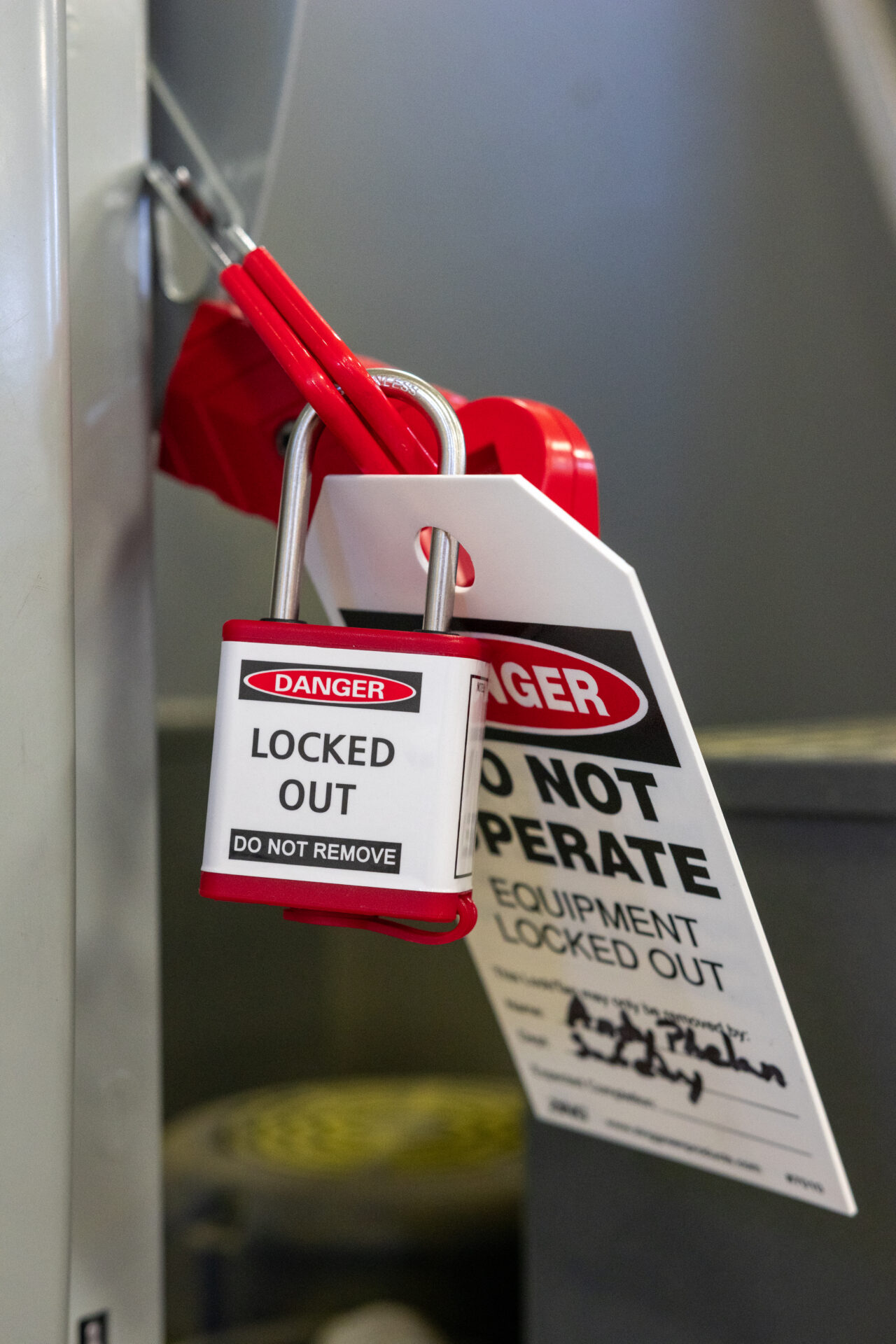
This is also where coordination with lockout/tagout, confined space, PPE, hot work, and other safety programs becomes important. Hazard communication does not replace those requirements, and those programs do not replace chemical hazard communication.
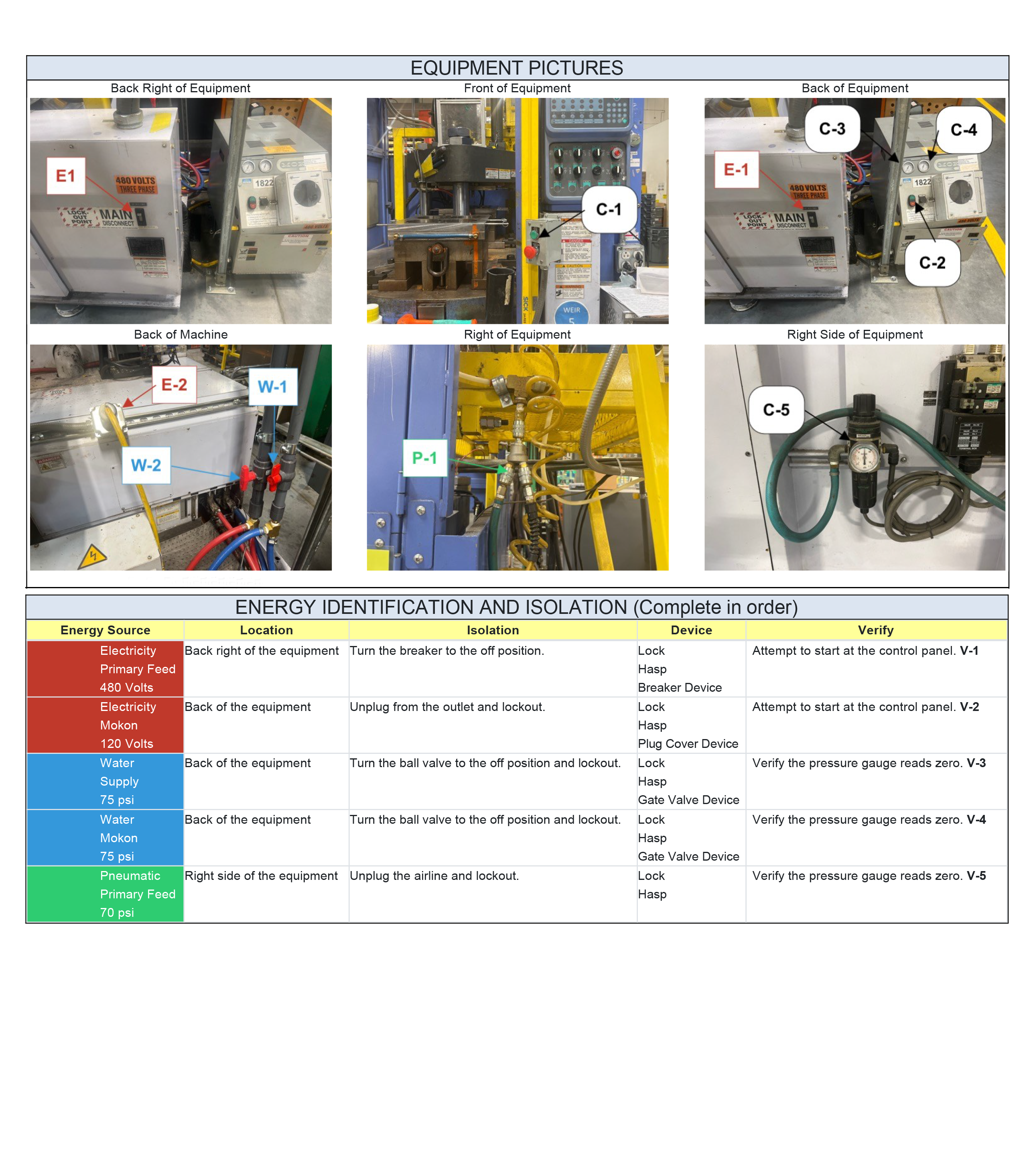
For example, an employee servicing a chemical-processing machine may need an energy control procedure under OSHA’s lockout/tagout requirements while also needing information about chemical residues or other hazardous substances that could be encountered during the work.
Mistake #7: Ignoring Contractors and Multi-Employer Worksites
Manufacturing facilities frequently use outside contractors for maintenance, construction, cleaning, mechanical work, electrical work, equipment installation, and specialized services.
Hazard Communication responsibilities do not stop at the plant’s own employees. On multi-employer worksites, employers may need to communicate information about hazardous chemicals, precautions, SDS availability, and workplace labeling systems to other employers whose employees may be exposed.
The process should work in both directions. Contractors can introduce products that plant employees may encounter, while the host employer may have chemical hazards that contractors need to understand.
A contractor onboarding process should therefore include chemical communication rather than focusing only on insurance certificates, badges, and general safety rules.
Mistake #8: Failing to Audit the Program in the Field
The best way to determine whether Hazard Communication is working is to compare the written system to actual workplace conditions.
A field audit can include several simple checks. Select chemicals from the inventory and confirm they are present where expected. Select containers from the production floor and verify that the products appear on the inventory. Confirm the correct SDS can be retrieved. Inspect secondary-container labels. Ask employees what a signal word or pictogram means and where they would find an SDS.
This type of verification often reveals problems that a document-only review misses.
A company may discover that three departments use different names for the same product, old chemicals remain in storage, locally purchased products never entered the approval process, or employees rely on a supervisor to find SDS information.
The 2024 OSHA HazCom Update
Employers should also be aware that OSHA updated its Hazard Communication Standard in 2024 to align primarily with Revision 7 of the United Nations Globally Harmonized System of Classification and Labelling of Chemicals and to address issues identified after the 2012 update.
The revisions include changes involving hazard classification, labeling, small containers, safety data sheets, and trade-secret provisions, among other items. The final rule became effective July 19, 2024.
OSHA subsequently extended the compliance dates in January 2026.
Chemical manufacturers, importers, and distributors evaluating substances had until May 19, 2026 to comply with the modified provisions. For substances, employers have until November 20, 2026 to make any necessary updates to workplace labeling, their program, and employee training resulting from newly identified hazards.
Mixture-related deadlines extend to November 19, 2027 for chemical manufacturers, importers, and distributors and May 19, 2028 for applicable employer updates.
During the applicable transition periods, regulated parties may comply with the earlier standard, the updated requirements, or both.
For manufacturers that have not reviewed their program recently, the new deadlines provide another reason to conduct a structured review now rather than waiting for an inspection or incident.
A Practical Hazard Communication Audit
A useful Hazard Communication audit does not have to begin as a massive project. Start by selecting one department or production area and compare five things:
Then expand the review across the facility.
Look closely at maintenance shops, tool rooms, chemical storage locations, laboratories, sanitation areas, paint operations, wastewater treatment, and temporary project areas. These locations often accumulate products that bypass normal purchasing or chemical approval procedures.
Document discrepancies and assign corrective actions. If an obsolete chemical is discovered, decide whether it should be removed. If an SDS is missing, obtain the current version. If a secondary container is unlabeled, correct the label and determine why the labeling process failed. If an employee cannot access hazard information, address the system rather than treating the employee response as the only problem.
The objective should be repeatability. A good process prevents the same issue from returning six months later.
Hazard Communication Is a System, Not a Binder
Companies often struggle with this standard because responsibility is spread across purchasing, EHS, supervisors, maintenance, operations, contractors, and employees. No single binder can control all of those activities.
An effective Hazard Communication program connects chemical approval, inventory management, SDS control, workplace labeling, training, inspections, and corrective action. It also creates clear ownership for keeping each part current.
For small and mid-sized manufacturers, that does not necessarily require a complicated system. It does require consistent processes and periodic verification.
The most important question is not whether your facility has a written program. It is whether the program accurately reflects the chemicals, people, and work taking place today.
A facility that can answer that question confidently is much better positioned to protect employees and demonstrate compliance when OSHA arrives.
Hazard Communication Checklist
Use these questions as a quick internal review:
- Is the written program current and facility-specific?
- Does the hazardous chemical inventory match what is actually onsite?
- Is there a current SDS for each hazardous chemical?
- Can employees access SDSs during their work shift?
- Are shipped and workplace containers properly labeled?
- Are secondary containers addressed consistently?
- Do employees understand the hazards in their work area?
- Is training provided when new hazards are introduced?
- Are non-routine tasks covered?
- Are contractor and multi-employer communication procedures documented?
- Are chemical-related deficiencies tracked through corrective action?
- Has the facility reviewed the 2024 HCS revisions and applicable compliance deadlines?
If several answers are uncertain, a formal program review is worthwhile. Hazard Communication compliance is easier to maintain when chemical information, inspections, training, and corrective actions are treated as active safety processes rather than static records.
Where Digital Safety Management Fits In
Chemical safety is only one part of managing industrial risk. Facilities also need reliable systems for machine inspections, corrective actions, energy control procedures, and periodic verification.
For hazardous energy in particular, digital lockout/tagout tools can help organizations maintain machine-specific procedures, capture field verification, document inspections, manage energy sources, and maintain more consistent records across multiple pieces of equipment or plant locations.
Smart Safety Pro helps industrial organizations move lockout/tagout procedures and inspections out of paper binders and into a structured digital process, giving safety teams better visibility into how their LOTO program is being executed in the field.
Frequently Asked Questions
This article provides general information about OSHA lockout/tagout requirements and is not legal advice. Employers should evaluate each machine, task, energy source, and workplace condition individually and consult qualified safety or legal professionals when necessary.